WhatsApp Image 2025-12-04 at 16.17.58_6547c329

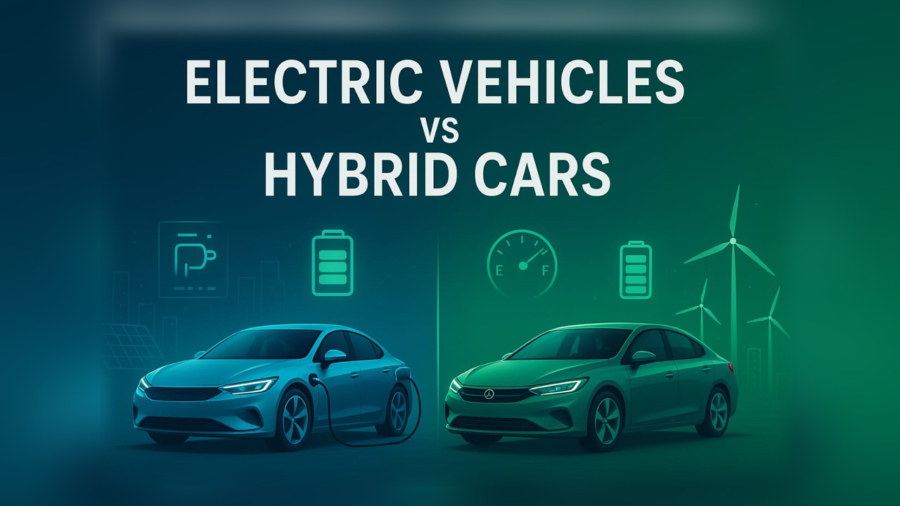
Electric Vehicles (EVs) vs Hybrid Cars

Introduction

Choosing a new car seems more composed than ever. Electric vehicles (EVS) grow rapidly in popularity and an intermediate ground that offers hybrid cars, many buyers ask: which makes more understanding of the next five years? Honest answer: It depends on. All cases of your driving habits, your budget, local charging and fuel infrastructure and priorities (costs versus the environment). This article breaks main areas – cost, maintenance, battery life, charging, environmental impact, government policy and market trends – so you can make a clear, practical alternative.

Head-to-head comparison — EVs vs Hybrids

1) Purchase cost and total cost of ownership (TCO)

Evs

• In advance price: Generally comparable hybrid and combustion cars, especially for long-distance models.

• Running cost: Charging per kilometer per kilometer per kilometer is often cheaper than gasoline per kilometer, especially if you pay at home during PAKH hours. The prices of electricity affect instability and time use.

• Incentive: Many places provide tax credit, discount or registration benefits for EV – they can significantly reduce effective procurement costs.

Hybrid

• In advance price: usually less than full, but more than basic petrol cars. Plug-in hybrids sit between hybrid and EVS in the price.

• Running costs: Hybrid fuel economy is better than pure petrol cars, and PHEV can drive many small trips on electricity. But long highways depend on gasoline, which increases costs.

• Insentives: Less incentives than full EVs, although some areas still provide benefits for low -emission hybrids.

Takeaway: In more than 3-5 years, TCO can favor EVs in areas with cheap power, strong encouragement and low-effect carbon intensity. Hybrids often offer low -flow costs and more predicted fuel options if charging infrastructure is limited.

2) Maintenance and reliability

Evs:

• Low moving parts: No oil change, no time belt, low liquid and simple powertrain. This means less regular maintenance costs.

• Use objects: brakes (often lasts longer due to regenerative braking), tires, suspensions and cabin products remain.

• Software and electronics: Modern EV -er chairs too much on software – updates and current electronic fixes can be part of the maintenance.

Hybrid:

• More complex powertrains: Hybrid combines an electric components combustion engine, so there are several systems to maintain.

• Diversity of maintenance: They still require oil change, cooling system checks and ice-related repairs-yourself about many hybrid systems are engineers for long life.

• Long time cost: Depending on use, hybrid maintenance costs may be higher than EV -but can be reduced by clean ice cream cars.

Takeaway: EVS usually wins for low regular maintenance, but can see software and battery -related service costs. Hybrids are reliable, but transmits maintenance of ice.

3) Battery life, replacement and departure

Evs:

• Battery life: Modern EV battery usually maintains useful capacity for many years. Expect gradual decline (a few percent per year depending on use and climate).

• Warranty: Manufacturers usually warranty batteries (eg 8 years or ~ 100,000 miles specific).

• Replacement cost: Replacement of one -time amount can be expensive, although other lifetime and recycling markets are growing, and the cost of compensation is declining.

Hybrid

• Hybrid battery: Small and designed for different stress profiles; They also appear, but can be very durable. PHEV batteries are large and more similar to EV batteries.

• Compensation: Historically, hybrid battery replacement is important for some older models, but today less common.

Takeaway: Both technologies mature. The battery is a cost factor, but the improvement in warranty and recycling/SEC-Life industries reduces long-term risk. For a 5 -year -old window, battery replacement is unlikely for most users.

4) Charge infrastructure versus fuel flexibility

Evs

• Charging at home: The biggest feature if you can install a home charger – good charging gives you a “full tank” every morning.

• Public charging: Level 2 charger is common in urban/residential areas; DC Fast Charger handles long trips, but varies by field in availability and speed.

• Charging time: Slow gas tank compared to fuel. Quick charging reduces the time, but is expensive and provides more stress for the battery.

Hybrid

• Fuel flexibility: Hybrid and PHEV can use gasoline if power charging is not available – it reduces the fear of range.

• Charging (for PHEVs): Short plug-in series (usually 20-60 mi) which owners are good for daily traffic on regular charging.

Takeaway: If you have reliable home charging or public fast charging with the routes you are traveling, it is very practical. If you have a lack of charging access or often make long journeys in areas with sparse charger, giving hybrids or PHEV -er more flexibility.

5) Environmental impact

Evs:

• Telpy emissions: Zero during operation. General emissions depend on the source of electricity – cleaner network means cleaner driving.

• Life -related: production of EVs, especially battery production, originally high emissions, but operating savings over time are usually equalized. Reuse/recycling and cleaner grid improves discharge of life cycle.

Hybrid

• Telpy emissions: IS produces less than cars, but still produces emissions. If most of it is used on power, PHEV shorts can be very clean for daily stations.

• Life cycle: Less battery production effects compared to EVs, but still produces emissions from combustion in regular use.

Takeaway: On the balance, most areas in EVs have an increase in life to reduce greenhouse gas emissions-special where the grid is low carbon or where the owner charges with renewable energy.

6) Government policy and incentives

Many governments lead strict emission rules, areas with low vigilance and incentives to speed up the EV adoption.

Grants, tax credit, discount and non-monetary incentives (HOV access, low registration fee) often favor EVs.

Some fields provide transition incentives for hybrids, but the guidelines are in favor of electrification. Expect the increasing support for increasing regulatory pressure on ice cream cars and increased support for EV infrastructure rolls.

Takeaway: In most major markets, political trends benefit to EV -adoption over the next five years. This can change the total costs, resale values ​​and convenience.

7) future market trends and resale values

• EV model diversity: Increasing price segments each year – cheaper and more skilled models come continuously.

• Resale values: Initial EVs were indefinite resale values, but it is stabilizing because of the market for the market and battery health becomes an understandable factor.

• Hybrid niche: Hybrids remain attractive to buyers and seek infections without anchor, but their long-term market dominance is likely to shrink when the charging network expands and EV prices fall.

Takeaway: If you are planning to use it again in 3-5 years, the demand for the market will bend against EVS in many areas – but issues under local conditions. Hybrids can have value in markets with poor charging coverage.

Practical landscape – which is smart for you?

• You drive <50 miles per day, there is a garage, and charged at home: EV is probably smart alternative – the car’s operating costs, problems with little maintenance and strong environmental benefits.

• You often take long walks in areas with rare fast chargers: a hybrid or plug-in hybrid gives peace of mind and flexibility.

• You need the cheapest option in advance and cannot install a home charger: A traditional hybrid can be a practical choice.

• You prioritize low emissions and have access to renewable or a clean grid: bends against EVS for maximum environmental benefits.

Conclusions and recommendations

Over the next five years, EVS is a smart alternative for most drivers where you have reliable home coupling or growing public charging tights, access to encouragement and relatively low -carbon. They usually win at low operating and maintenance costs, better emission profiles and adaptation to the government’s policy.

However, hybrids are still smart options for drivers who need to guarantee the flexibility of the series today – people living in apartments without charging access or traveling through areas with a lack of reliable fast chargers regularly. Plug-in hybrids (PHEVS) provide a good bridge for many driver-electric first commuting and petrol backup for trips.

My recommendation: If your daily routine allows your home and your area has decent charging infrastructure (or you can charge at work), choose an ev. If not, select Hybrid or PHEV as a practical transitional option, until you recharge access and EV strength is further improved.
OK

The Rise of AI Assistants in 2025

Introduction

By the year 2025, AI assistants have transitioned from being mere futuristic concepts to essential collaborators in professional, educational, and daily environments. Tools like ChatGPT, Gemini AI, and Microsoft Copilot are transforming our systems of writing, researching, coding, communicating, and managing projects. These intelligent answers boost workplace efficiency and offer inventive study systems for students, basically reshaping our methods to learning and working.

This article observes how AI assistants in 2025 are enhancing productivity, the benefits they offer, the challenges they pose, and the potential upcoming landscape of AI in schooling and the factory. How AI Assistants Are Changing Productivity

AI-driven tools are now seamlessly integrated into daily workflows. They empower authorities to protect time, increase correctness, and stay organized.

Key areas where AI assistants excel:

Writing & Editing: ChatGPT and Gemini AI generate reports, draft emails, and polish professional content with a human-like quality.

Research Assistance: AI quickly analyzes large datasets, summarizes articles, and provides trustworthy sources—significantly cutting down research time.

Coding & Development: Microsoft Copilot supports developers by suggesting clean code, correcting errors, and optimizing project builds.

Communication: AI chatbots handle customer inquiries, schedule meetings, and even craft personalized responses.

Project Management: AI tools predict deadlines, intelligently assign tasks, and monitor progress in real-time.

📌 Expert Insight: As productivity consultant Laura Jensen remarks, “AI assistants in 2025 will be like having a digital co-worker. They manage repetitive tasks, enabling humans to focus on creative and strategic thinking.

The Impact of AI on Education

In 2025, students are among the primary beneficiaries of AI study tools. With resources like ChatGPT and Gemini AI, the learning experience has become more engaging and effective.

Practical applications of AI for students include:

• Homework Assistance: ChatGPT simplifies complex ideas into understandable language.

• Essay and Report Composition: AI helps create organized outlines, drafts, and even recommends sources.

• Study Organization: AI develops personalized schedules and revision plans.

• Exam Readiness: Gemini AI produces practice tests and flashcards.

• Language Acquisition: These tools offer immediate translations, grammar corrections, and opportunities for conversational practice.

💡 Example from the Real World: University students are now utilizing Microsoft Copilot to review research articles, condense essential information, and arrange citations in just a few minutes.

Advantages of AI Assistants in 2025

• Time Efficiency: Automates mundane tasks.

• Enhanced Precision: Minimizes human errors in writing, programming, and data entry.

• Customization: Adjusts to user behaviors for more intelligent suggestions.

• Inclusivity: Removes obstacles for learners with disabilities.

• Teamwork: Improves collaboration through shared AI-driven project dashboards.

Obstacles and Issues

Although the leading AI tools for work and education provide significant benefits, they also present challenges:

• Excessive Dependence: Students and professionals may become overly reliant on AI.

• Privacy Concerns: Issues surrounding the storage of sensitive data.

• Bias & Precision: AI-generated outputs might exhibit biases or inaccuracies.

• Skills Deficiency: Critical thinking and problem-solving abilities may diminish if AI handles all tasks.

📌 Expert Insight: Technology ethicist Dr. Amir Malik cautions, “AI assistants are powerful, but they should enhance—not substitute—human judgment.”

The Future of AI in Education and Work

Looking forward, AI assistants in 2025 and beyond are set to become increasingly personalized, context-aware, and proactive. We can anticipate:

• Smarter Learning Platforms: AI tutors that adjust in real-time to a student’s progress.

• Workplace Integration: Enhanced collaboration between AI and enterprise software.

• Lifelong Learning Support: AI assisting professionals in upskilling and career advancement.

• Ethical Frameworks: More robust policies on transparency, bias mitigation, and responsible AI application.

Conclusion

The emergence of AI assistants in 2025 signifies a pivotal moment in our work and study practices. Tools such as ChatGPT for students, Gemini AI, and Microsoft Copilot are not merely enhancements they are revolutionizing productivity, collaboration, and education.

For professionals, they represent the top AI tools for work that streamline complex tasks. For learners, they serve as the ultimate AI study hacks 2025 companions. However, the future hinges on achieving balance: leveraging the advantages of AI while confronting its challenges. Those who master effective collaboration with AI will secure a lasting advantage in both education and the workplace.

WhatsApp Image 2025-11-24 at 9.50.28 PM

Top 10 Gadgets in 2025

Introduction

The year 2025 has come, bringing with it a surge of innovative technology gadgets that are smarter, quicker, and more interconnected than ever. From AI-enhanced devices to wearable health technology and AR/VR headsets, these advancements are transforming our lifestyles, work environments, and recreational activities.

In this guide, we will delve into the Top 10 gadgets of 2025—showcasing their features, advantages, and practical applications that make them the must-know trending gadgets for every technology enthusiast.

1. Foldable Smartphones 2.0

Foldable phones have progressed into sleek, robust, and the best tech devices of 2025.

Features: Scratch-resistant flexible glass, 4K displays, multitasking split-screens.

Benefits: Merges the power of a tablet with the portability of a phone.

Impact: Ideal for students and professionals who require productivity while on the move.

💡 Expert Insight: Analysts forecast that foldables will lead the latest gadgets in 2025, with Samsung and Huawei at the forefront of the market.

2. AI-Powered Smartwatches

The next generation of smartwatches transcends mere timekeeping—they serve as portable health devices.

Features: AI-driven health monitoring, stress tracking, and real-time coaching.

Benefits: Assists users in managing sleep, fitness, and overall wellness.

Impact: Extensively utilized by athletes, students, and even healthcare professionals for remote patient monitoring.

3. Augmented Reality (AR) Glasses

AR glasses have transitioned from a futuristic concept to a common reality.

Features: Lightweight construction, real-time navigation capabilities, and immersive experiences for shopping and gaming.

Benefits: Provides hands-free access to vital information.

Impact: Transforming educational environments, workplaces, and entertainment options.

📌 Real-World Example: The AR glasses from Apple and Meta, set to launch in 2025, enable students to engage with 3D lessons, positioning them as one of the most sought-after gadgets of 2025.

4. AI Home Assistants 2.0

In 2025, smart home technology is driven by sophisticated AI.

Features: Automation that is aware of context, control through voice and gestures, and efficient energy management.

Benefits: Saves time, cuts costs, and enhances convenience.

Impact: Homes are now operated by predictive AI systems that foresee user requirements.

5. Portable Health Scanners

Among the innovative gadgets of 2025, handheld health scanners are making significant strides.

Features: Instant glucose monitoring, ECG readings, hydration levels, and oxygen tracking.

Benefits: Provides affordable and accessible healthcare solutions at home.

Impact: Facilitating preventive care for students, professionals, and the elderly.

6. VR Headsets for Everyday Use

Virtual Reality headsets have become compact and budget-friendly.

Features: 8K resolution, wireless connectivity, lightweight design.

Benefits: Engaging learning experiences, fitness activities, and entertainment options.

Impact: Students participate in virtual classes, gamers immerse themselves in hyper-realistic environments, and professionals conduct VR meetings.

7. AI Study Companions

Among the top technological devices in 2025 are AI-driven learning tools.

Features: Customized tutoring, instant essay feedback, multilingual translation capabilities.

Benefits: Assists students in saving time and enhancing productivity.

Impact: Education becomes more accessible, closing learning gaps globally.

8. Smart Rings and Wearables

The advancement of miniaturized technology has resulted in innovative wearables such as smart rings.

Features: Contactless payment options, health tracking, gesture-based control for phones.

Benefits: A lightweight and fashionable alternative to traditional smartwatches.

Impact: Favored by young professionals for its combination of style and functionality.

9. Portable Solar-Powered Chargers

Focusing on sustainability, solar-powered devices are becoming increasingly popular.

Features: Rapid charging capabilities with solar technology, compact and portable designs.

Benefits: Environmentally friendly and dependable in off-grid locations.

Impact: Travelers, students, and outdoor adventurers can always stay powered up.

10. Smart Laptops with AI Integration

The distinction between smartphones and laptops is diminishing. Laptops in 2025 will incorporate AI processors.

Features: Instant translation, automatic summarization of notes, and facial recognition for security.

Benefits: Enhances productivity and fosters creativity.

Impact: Crucial for students, freelancers, and business executives.

WhatsApp Image 2025-10-28 at 19.34.56_1ceaaae8

New Mobile Technology

Introduction

The year 2025 is proving to be a landmark for the mobile industry. With rapid innovations, smartphones are no longer just communication tools—they are becoming powerful hubs for productivity, entertainment, and digital experiences. From 5G and beyond to AI-powered features and foldable designs, the new mobile 2025 launches are redefining how we interact with technology.

In this article, we will examine the upcoming mobile technology trends for 2025, their effects in the real world, and what users, businesses, and developers can anticipate regarding the future of smartphones.

1. 5G and Beyond: Faster, Smarter, Everywhere

By the year 2025, 5G networks will be ubiquitous, with telecom companies already delving into the development of 6G. These advancements signify:

Ultra-fast speeds that facilitate seamless 8K video streaming.

Minimal latency for real-time gaming and remote surgical procedures.

Enhanced IoT integration, linking homes, vehicles, and wearable technology without disruptions.

📌 Actionable Insight: Businesses must refine their applications and services for ultra-low latency settings, guaranteeing smooth operation within the 2025 smartphone landscape.

2. Foldable and Flexible Displays: The New Normal

Foldable smartphones have evolved from experimental devices to widely accepted technology. The future of this phone innovation includes:

More robust hinges and scratch-resistant flexible glass.

Hybrid designs (tablet + phone combined).

Innovative multitasking capabilities, such as the ability to run three applications simultaneously.

💡 Expert Opinion: As per industry analysts at Counterpoint Research, foldable devices are projected to represent over 20% of premium smartphone sales by 2025, establishing them as a key mobile technology trend to monitor.

3. AI-Powered Smartphones: More Intelligent Than Ever

Artificial Intelligence is now a core component of almost every mobile launch in 2025. Significant enhancements include:

On-device AI chips that facilitate real-time translation, image recognition, and predictive typing.

Personalized assistants designed to anticipate user requirements.

Camera intelligence that delivers DSLR-quality images through AI scene optimization.

📌 Actionable Insight: Businesses can utilize AI capabilities for personalized marketing applications, enhancing customer engagement to be more intelligent and relevant.

4. Advanced Battery Technologies: Moving Forward

One of the most eagerly awaited technologies for 2025 is the advancement in smartphone batteries. Anticipate:

Solid-state batteries that provide 2–3 times the lifespan of traditional lithium-ion batteries.

Ultra-fast charging capabilities (from 0 to 100% in less than 10 minutes).

Sustainable materials that promote eco-friendliness.

💡 Real-World Example: Companies like Xiaomi and Samsung have already presented prototypes of 2025 smartphones powered by solid-state technology, promising reduced charge cycles and enhanced safety.

5. AR and VR Integration: The Mobile Metaverse

Augmented Reality (AR) and Virtual Reality (VR) have transitioned from niche technologies—emerging trends indicate they are pivotal to the future of mobile technology:

AR glasses that work in conjunction with smartphones for immersive experiences in shopping, gaming, and navigation.

VR-capable phones that allow for 360° experiences without the need for additional hardware.

Adoption in enterprises, ranging from remote training to architectural simulations.

📌 Actionable Insight: Developers should prioritize AR compatibility in their applications, as smartphones in 2025 are designed for rich, immersive digital experiences.

6. Enhanced Security Features: Prioritizing Privacy

As innovation progresses, so does the need for data protection. The upcoming mobile launches in 2025 will emphasize:

Biometric authentication methods (including iris scans, 3D facial recognition, and palm identification).

Blockchain-based decentralized identities.

AI-powered threat detection systems designed to combat phishing and malware.

💡 Expert Insight: Cybersecurity professionals stress that improved mobile security features are not merely optional—they are crucial for maintaining user trust in the landscape of new technology in 2025.

WhatsApp Image 2025-10-28 at 18.40.36_1742272e

Future of Smartphones 2025

Introduction

The smartphone industry has always been at the cutting edge of innovation, but 2025 is shaping up to be one of the most transformative years yet. From AI-powered features and foldable displays to next-gen connectivity and eco-friendly materials, smartphones are evolving beyond just communication devices—they’re becoming intelligent companions.

This article dives deep into the future of smartphones 2025, highlighting what to expect from both mid-range and flagship phones. Whether you’re a casual user or a tech enthusiast, understanding these trends will give you a glimpse into what the next generation of mobile technology holds.

The Future of Smartphones – Predictions for 2025

The future of smartphones predictions 2025 suggest that we’ll see smarter devices, more immersive user experiences, and sustainability at the forefront. Let’s break down the key innovations expected to dominate.

Foldable and Rollable Displays

  • Flagships: Foldable smartphones are no longer experimental—they’re going mainstream. Brands are perfecting seamless hinges, durable glass, and ultra-thin designs. By 2025, flagship foldables will likely offer rollable screens, expanding display sizes on demand.
  • Mid-Range: Affordable foldable options will start appearing, though with limited durability and slightly less premium materials. Still, they’ll give average users access to futuristic screen designs.

What does the future of smartphones look like? Flexible displays are set to redefine how we multitask, watch content, and even use our phones as mini-tablets.

AI-Powered Features

  • Flagships: Expect AI-driven personalization, from smarter cameras that adapt to scenes instantly to AI assistants that predict tasks before you ask. AI will also optimize battery, connectivity, and even health monitoring.
  • Mid-Range: While not as advanced, mid-range phones will include AI-based photography enhancements, predictive text, and voice assistance—bringing intelligence to more budget-friendly devices.

The future of smartphones with AI is all about making your phone proactive, not just reactive.

Camera Advancements

  • Flagships: Cameras in 2025 will focus on computational photography, 8K video recording, and periscope zoom lenses. AI will correct lighting and stabilize footage in real time.
  • Mid-Range: These phones will still offer impressive photography with multi-lens setups, but without the extreme zoom or advanced AI tricks of flagship devices.

Cameras remain a battleground for brands, and users can expect photography to feel more professional than ever.

5G and Beyond – The Road to 6G

  • Flagships: While 5G is now standard, 2025 flagships may introduce early 6G-ready hardware, promising faster speeds, ultra-low latency, and smoother AR/VR experiences.
  • Mid-Range: Mid-range models will provide stable, affordable 5G experiences, ensuring connectivity for all.

For both tiers, statistics on the future of smartphones suggest connectivity will be one of the top factors influencing purchase decisions.

Battery Innovations

  • Flagships: Expect graphene batteries and super-fast charging (full charge in under 10 minutes). Wireless charging pads may also support multi-device charging.
  • Mid-Range: These phones will adopt longer-lasting lithium batteries with improved fast charging, though not as cutting-edge as flagships.

Battery life is still one of the biggest concerns for users, and 2025 will finally bring significant breakthroughs.

Eco-Friendly Designs

Sustainability is no longer optional.

  • Flagships: Premium phones will incorporate recycled metals, biodegradable packaging, and energy-efficient components.
  • Mid-Range: Brands will focus on repairability, trade-in programs, and recycled plastics to make eco-friendly choices more accessible.

The future of smartphones isn’t just about performance—it’s also about responsibility.

AR and VR Integration

  • Flagships: Smartphones will increasingly integrate with AR glasses and VR headsets, making them hubs for immersive experiences. Features like real-time translation, 3D navigation, and AR gaming will be powered directly by smartphones.
  • Mid-Range: Lighter AR experiences will be included, such as enhanced shopping apps, educational tools, and simple AR games.

Conclusion

  • 2025 as a milestone year in smartphone evolution.
  • Mid-range vs flagship innovations shaping accessibility.
  • Balance between performance, sustainability, and connectivity.
WhatsApp Image 2025-10-28 at 18.37.47_0982807e

Free Technical Equipment for Students

Introduction

Today it is to be a student, both exciting and heavy. On the one hand, there are endless chances to learn and connect. On the other hand, being organized, dealing with period and keeping up with training can make it touch like a constantly tough fight. Good news? Technology can help.

Free apps and platforms are not only practical – they can change your way of studying, collaboration, collaboration and growing individually. Wher you need a clever Way to take notes, Tools to Defeat Laxity, or Resources to Learn Beyond The Orbit, Is Something For You. Let’s find out the best free technical equipment to know about each student.

Free technical equipment Each student should try

1) Stay note apps and never remember an idea

Evernote (free plan): Perfect for saving lecture notes, two-do lists and even online articles.

Microsoft OneNote: Free with Microsoft account, OneNote is like a digital notebook with unlimited classes. It is very good for students who prefer handwriting or sketching with tablets.

Google Keep: A lighter option for fast notes, checklists and reminders that drop on all devices.

Why they help: Saves time from taking digital notes, reducing chaos and discovering everything so you can review quickly before the exam.

2)Time Management Equipment – Defeat The Laxity and Stay On The Track

Trailo: Organization of blind features with boards and checklists – Ideal for group projects or task tracking.

Google Calendar: Personal obligations with schedule classes, time constraints and reminder.

One (free version): A GameIfied Focus app that helps you distract “growing trees” according to the study.

Why they help: Students often explore tasks, part -time jobs and social life. These tools help to prefer tasks, reduce stress and build stability.

3) AI-acting student assistant-Hothyar studies, low stress

• Chatgpt (free plan): Great to summarize long readings, generate student guides or to explain hard concepts in single language.

• Quizlet: AI-inaccurate bruker flashcards og quiz for å hjelpe deg med å mestre mesterens emner raskere.

• Grammarli (Free Version): Examinations for Grammar, Clarity and Tone for Essays, Reports and Emails.

Why they help: AI equipment does not take the learning space, but they make the study effective. They provide quick clarification, reaction and practices that fit into the busy student life.

4) Collaborative platforms – make smart together

Google workpiece (doors, sheets, slides): Free for free for anyone with Google account, perfect for real -time collaboration on tasks and projects.

• Slack (free plan): A group project communications center – much cleaner than endless WhatsApp messages.

Dharna (free for students): The group links notes, tasks and databases for plan and project management.

Why they help: Group work is often chaotic. Collaborative equipment holds communication, files and progress in one place – no excuse for missing deadline.

5) Free Teaching Resources – Expand Knowledge Beyond Class

• Khan Academy: Mathematics, Science, Economics and more and more free lessons with practice.

• Cinera (free course): While some certificates use money, many top universities provide free learning material.

• DUULLINGO: Fun and interactive way to learn a new language for free.

• TED-ED: Short, attractive videos that increase curiosity and deep understanding.

Why they help: Free resource students give students a chance to go beyond the textbooks, discover passion and create skills for future careers.

How do these units promote personal growth

Note apps encourage organized thinking.

Time management equipment creates discipline and reduces anxiety.

AI-operated supportive side rivers develop skills and efficiency.

Collaboration Teach Platform Teamwork, a skill is important for your career.

Free teaching resources expand the horizon and motivate curiosity.

In short, they do not only help professionally – they prepare students for life after graduation.

conclusion

Technology is no longer optional for students – this is necessary. Proper free equipment can help you unlock personal growth without studying smart and using a penny. Start the short: Select a device from each category, integrate it into your routine and see how easy your educational life will be.

Over the next five years, the most smart students will not be the only ones doing hard studies – they will be what they wisely use technology.

WhatsApp Image 2025-10-28 at 18.35.29_9caa86cb

Cybersecurity in Daily Life

Introduction

Every day we browse, shopping, chatting and even jobs online without considering much security. But the Internet is not always a safe place. Cyber ​​criminals not only target large companies – they also follow ordinary people through weak passwords, fake e -mail messages and unsafe equipment.

Think about it: A careless click on a careless link can highlight your bank information. Using the same password everywhere can mean losing access to all your accounts if only one is hacked. The good news is that you do not need to be a technical expert to protect your security. By practicing some simple habits, you can dramatically reduce the risk and enjoy the electronic electronic world with confidence.

Let’s find out the most practical methods to keep you safe online in daily life.

Anyone can follow cyber security tips every day

1) Use strong, unique password

Using “123456” or “password” is like unlocking your front door. Hackers use automatic tools to estimation weak passwords in seconds.

What you should do:

• Create a password with a mixture of letters, numbers and symbols.

• Avoid private information such as a birthday or name.

• Use a password processing (eg load pass or bitwardon) to generate and save unique passwords for each account.

Example of real life: If your password on social media is stolen and you have reused it for e -mail or bank, hackers can access everything.

2) Enable two -factor authentication (2FA)

Even strong passwords can be stolen through fishing or data leaks. Where 2FA adds an extra shield.

Here’s how it works: After entering your password, you need to be generated by the code sent on your phone or an authentic app.

Why it helps: Although hackers know your password, they can’t reach your account without another code.

Pro tips: Use authentic apps (Google Artist, Autical) instead of SMS, as SMS can be kidnapped.

3) Practice safe browsing habits

Not all websites are reliable. Some harmful software hides or fools you to share data.

What you should do:

Look for HTTPS (a padddal symbol in the address field).

• Avoid downloading files or software from unknown sources.

• Keep your browser and expansion updated.

Example: Clicking a fake “Download” button on a shady site can install spyware that spores keystrokes.

4) Avoid fish fraud

Fishing -e post and texts are one of the most common dangers on the web. They often look like they belong to your bank, the delivery service or even a friend.

How to Detect them:

General greetings such as “Dear Customer”.

• Immediate language (“Your account is suspended!”).

• Links that look suspicious or do not match the official site.

Solution:

• Never click on unknown links.

• Contact the company directly through your official website or phone number and confirm directly.

Example: A student receives an e -mail claiming to be from their university IT team, “to reset the password”. Clicking on the link can leave the login details to the hackers.

5) Secure your equipment

The phone and your laptop are gateways to your personal information. If they are lost or stolen, anyone can reach sensitive information.

What you should do:

Enter device password, stick or biometric lock.

• Install antivirus software on the laptop.

• Keep the operating system up to date in patch safety holes.

• Use my “Find Device” features to track or drought lost devices.

6) Protect Online Payment

Online shopping is convenient, but it comes with risk. False shopping page or unprotected payment portal cards can steal details.

What you should do:

Shop on reliable websites with just http -er.

• Avoid using public Wi-Fi for financial transactions.

• Use safe payment methods such as payal or virtual debit cards.

Example: If you enter the card details at a fake shopping site, which offers “very good-to-million” appointments, your information can be sold on the dark web.

Why cyber security means something in daily life

• Security: You can browse constant fear, act and talk.

• Protects finance: fraud, fraud and unauthorized transactions.

• Protects identity: Prevents hackers from abusing their personal information.

Time and stress saves: Getting from a hack is far more difficult than stopping one.

Cybercity is not about paranoia – it’s all about being smart and careful in a fast digital world.

Conclusion

Cyber ​​security should not be complicated.By using in a small way, you can turn two-factor authentication, be careful about email and secure your equipment to make a big difference.

Think of it like locking the doors at night. You cannot control any risk, but you can make it very difficult for the invaders to get it. By practicing these habits daily, you will not only protect your data, but will create digital trust.

Staying safe online is not optional – it is needed by all students, professional and everyday internet users.

WhatsApp Image 2025-10-28 at 18.55.07_1eb6e744

Top 10 free Artificial Intelligence tools

Introduction

Artificial Intelligence isn’t just the domain of techies anymore. These days, students everywhere are using AI tools to study more effectively give themselves a break (and sometimes even raise their grades. When it comes to writing or assignments, making presentations, research — AI can help students make their life a lot simpler.

10 free AI tools every student should be aware of in 2025 are being presented by me. These tools are student-friendly and free to begin with which is probably the best things about them.

  • ChatGPT (Free Version)
  • Google Gemini
  • Perplexity AI
  • Grammarly
  • The QuillBot
  • AI Canva
  • SlidesAI
  • Tome AI
  • Notion AI
  • Mendeley AI

ChatGPT (Free Version)

• Best for: Essay assignments explanations and coding help

• Why students love it: ChatGPT serves as a 24/7 personal tutor. You can tell it to explain difficult concepts summarize long notes and even assembly examples for better understanding.

•           Try it here: chat.openai.com

Google Gemini

• Good for: Fast research and study help

• Why students like it: Gemini is one part power of Google search and one part artificial intelligence. It’s not hundreds of confusing links to dozens of sexbot developers. Great for jotting down notes on the fly.

•             Try it here: gemini.google.com

Perplexity AI

• Best for: Research and scholarly information

• Why students like it: Unlike many AI tools, Perplexity provides trustworthy references and sources. If you are working on a paper and need to use reliable information, this is the site for you.

•             Try it here: perplexity.ai

Grammarly

• Ideal for: Verifying assignments’ spelling and grammar

• Grammarly is like having an English teacher in your browser, which is why students adore it. It draws attention to errors, offers fixes, and raises the standard of your writing overall.         

• Try it here: grammarly.com

The QuillBot

• Ideal for: Rewriting and paraphrasing text

• Reasons why students enjoy it: Assignments occasionally call for unique wording. QuillBot helps prevent plagiarism by rephrasing sentences without sacrificing meaning.          

•Try it here: quillbot.com

AI Canva

• Ideal for: Creative projects and presentation posters

• The reason why students adore Canva is that it offers thousands of free templates and makes design even simpler with its AI features. In just a few minutes, students can produce slides or graphics that look professional.

•           Try it here: canva.com

SlidesAI

Why students adore SlidesAI: If you detest creating presentations, this tool is a lifesaver. It’s best at converting text into pre-made slides. Slides AI will automatically create a slide deck for you if you simply paste your text.

•           Try it here: slidesai.io

Tome AI

Greatest for: Creative presentations and storytelling
• The reason students adore it: Tome uses text prompts to create captivating visual presentations. For school projects where originality is just as crucial as knowledge, it’s ideal.

•           Try it here: tome.app

Notion AI

Why students adore Notion AI: It’s the best for organizing notes and summarizing study content. Notion is already widely used for taking notes, but AI makes it even more effective. It can help you stay on track with your study schedule and summarize lecture draft notes.

•           Try it here: notion.so

Mendeley AI

Why students adore it • Best for: Organizing citations and references Research paper writing can be stressful, particularly when it comes to citations. Keeping references organized and properly formatted in any style is a breeze with Mendeley.

•           Try it here: mendeley.com

In conclusion

AI tools are becoming a necessary component of student life and are no longer a luxury. These free resources can help you save hours of work and improve the efficiency of your study routine, whether you’re writing, researching, designing, or organizing.